Biodynamic Craniosacral Therapy
Biodynamic Craniosacral Therapy (BCST) is a gentle, non-invasive, hands-on body/energy work performed with light touch. It focuses on providing support to the nervous system which deeply affects all body processes and systems. BCST centers the belief that each person’s body has an innate way to heal and settle into balance. BCST is a slow and still modality, as a practitioner I act as a facilitator to your system expressing what and how it needs to find more ease, expansiveness and presence.
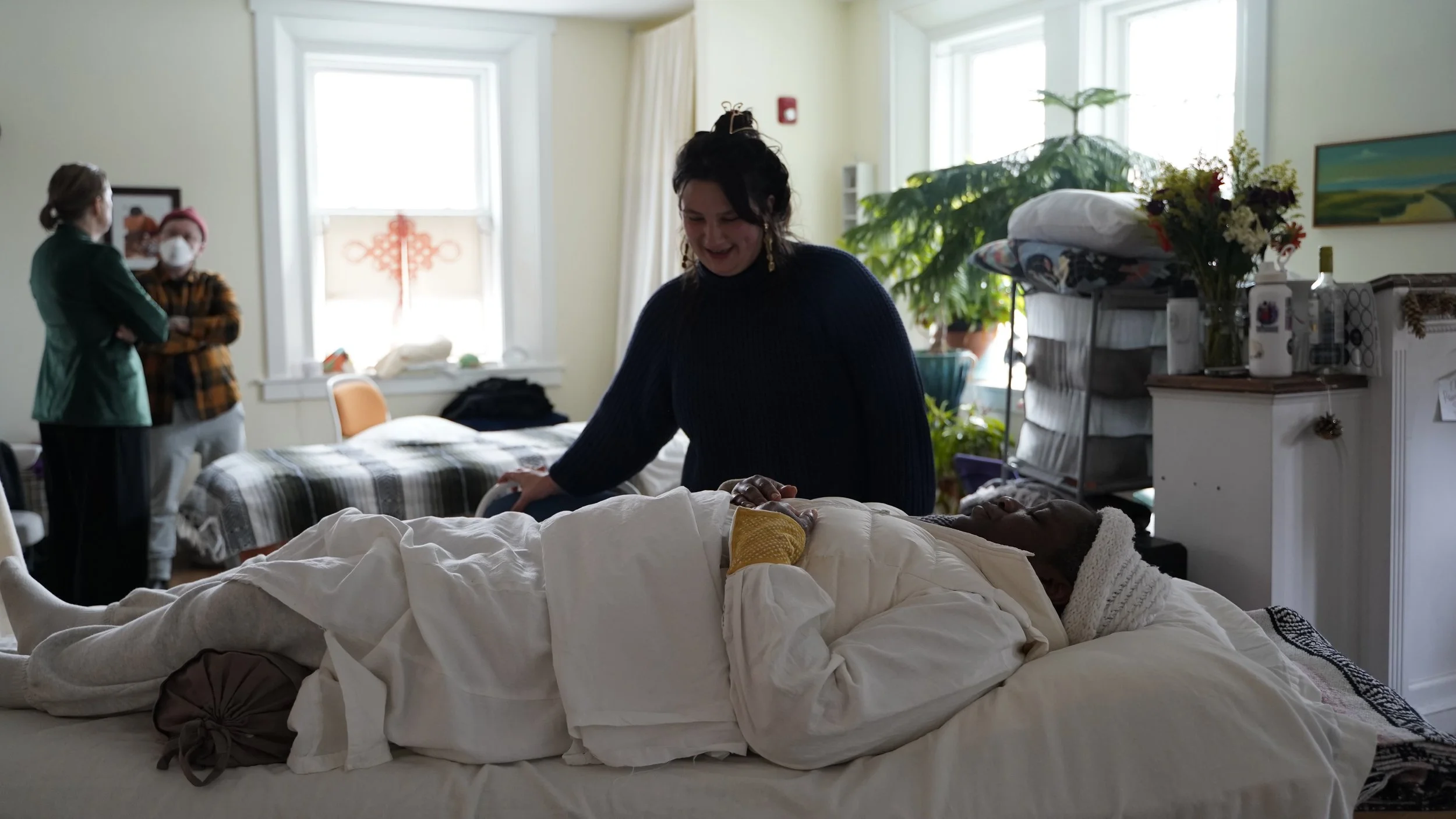
You can use this resource to think through where you land on the sliding scale. If you’re unsure, we can discuss finding an amount that feels sustainable during our initial consultation. I am eager to make sessions accessible; if the sliding scale range is not accessible for you, please reach out to me at gibbouscraniosacral.com.
Cost: Sliding Scale $75-180/60 minutes
Sessions will be an hour long. Sessions start with us having a conversation about how you are doing… what are you carrying with you? what is true for you in this moment? how is your body feeling? with what could you use support? After connecting and settling into the space and in relationship together we will move to the massage table. All sessions are conducted with the client fully clothed on a massage table. An important part of sessions is making sure you are as sensorily comfortable and supported as possible on the table — this could mean you need extra pillows under your knees, an electric blanket on, the lighting adjusted and so on! It is a time to learn to be picky and to ask for what you and your body need. Depending on where the session leads us and with consent from the client, the sessions will most often consist of several gentle holds most often at a clients’ feet, sacrum, spine and head.
I follow the lead of each person and aim to center listening to the body and its desired pace. I specialize in attuning to peoples’ systems in a way that supports the body to express and move what needs to be shifted, transformed or released. I hold consent, curiosity, and unconditional positive regard at the center of my practice. As a sense of safety and trust is developed releasing of tension and holding patterns follow. I will ask before making physical contact and will check in with you throughout the session. Sessions tend to be quiet and slow. You are always free to share throughout the session or situate into quiet (whatever feels most supportive to you). I welcome and celebrate all bodies! You are welcome in all your identities – your race, age, faith, class, ability, gender, size, sexuality, immigration status and more.
I practice on Thursdays out of an office on the top of Church Street in Burlington. Detailed instructions to the office will be provided upon booking.
What Does a Session Look Like?
The term Craniosacral therapy was coined by Andrew Stills in the mid-19th century. He grew up, lived and worked as a physician on a reservation where Shawnee people were systematically confined. The origin story of Craniosacral therapy is rooted in colonialism.The practice of Craniosacral therapy is a combination of Osteopathy and the traditional bone setting healing traditions of Shawnee people. Bone setting traditions have existed all the way back to Neanderthals and have been used across the world, across geography and cultures; hands on, bone setting healing is likely in all of our lineages somewhere. In a tangible gesture to honor this particular lineage I will redistribute 5% of my earnings to BIPOC centered healing and land sovereignty organizations. Susan Raffo is a Craniosacral therapist and organizer who writes beautifully and tenderly on this topic if you are interested in learning more.